

Academic & Crossref DOI Search
Scholarly Articles
6 articles found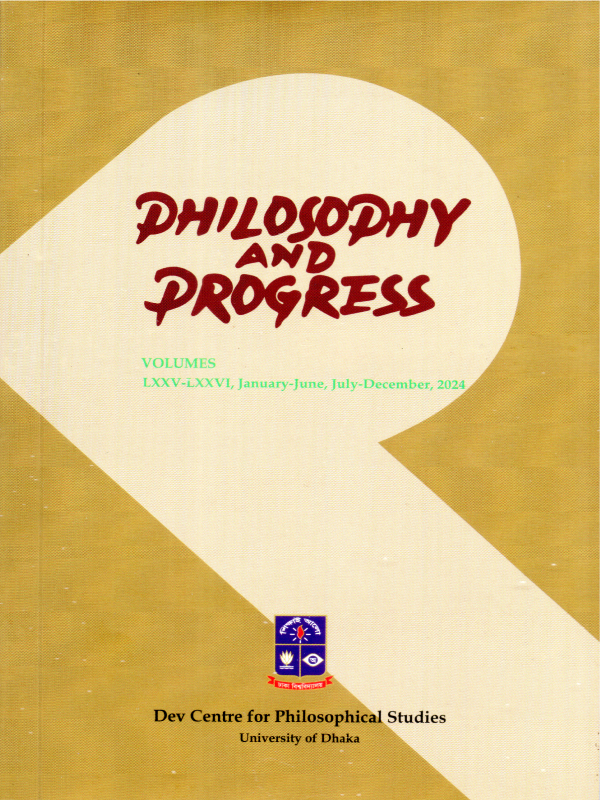
AFFIRMATIVE ACTION AS A REMEDY FOR JOB DISCRIMINATION
A careful examination of global history reveals that numerous forms of discrimination have persisted from antiquity through to the modern era. As a direct consequence, countless castes, ethnic groups, minorities, and women have been systematically denied their rightful opportunities and entitlements. This deeply ingrained pattern of inequity extends into the professional sphere, where discriminatory practices remain prevalent. In the contemporary business landscape, job discrimination stands out as a core ethical challenge. In order to address this burning issue scholars have introduced different remedies. Such as back pay, equal opportunities, hiring, front pay, promotion, reasonable accommodation etc. Among the various remedies proposed, affirmative action has emerged as a significant and influential measure. This article delves into the nature of job discrimination, traces the historical genesis of affirmative action, and clarifies the legal framework governing such policies. It further examines the principal arguments both supporting and contesting affirmative action, shedding light on its far-reaching social implications. In this paper, attempt has been made to show that this comprehensive analysis demonstrates how affirmative action helps cultivate a more equitable workplace environment and addresses the injustices that have shaped our shared past.
CULTIVATING A LIFE OF RESILIENCE AND VIRTUE: THE ART OF LIVING WITH STOIC TEACHINGS
This article will try to explore the practical applications of Stoic philosophy, emphasizing its relevance in enriching life and assisting individuals to face real-life challenges. Stoicism, an ancient school of thought, dedicates in putting philosophical knowledge into action to strengthen the inner self and attain emotional resilience. This study explores Stoic teachings on managing emotions, distinguishing between what belongs within our control and what does not. Additionally, the article highlights the four cardinal virtues of Stoicism—wisdom, courage, justice, and temperance, which are essential principles for leading a meaningful life. Focusing on scholarly quotes from notable Stoic figures, the discussion has a motivation to face the adversities of life with a resilient mind. A short introduction to the origins and nature of Stoic philosophy is provided herewith, which will help readers to understand the foundational spirit of the Stoic philosophy. Overall, this article is an attempt to present Stoicism as an art of living that promotes resilience along with virtue.
RESOURCE EXPLOITATION OF DEVELOPING COUNTRIES UNDER THE GUISE OF EOLIBERALISM
Since the 1970s, a transformative trend in global trade policy began to emerge, characterised by the strategic relocation of industries, particularly those detrimental in several respects, most notably within the environmental context, from economically advanced nations to less developed ones. This trend necessitates the transfer of resource-extracting industries (REIs) to continue their extraction activities in emerging nations, purportedly justified by these countries’ enhanced capabilities in resource management and extraction. However, a thorough examination of the extraction practices of these REIs reveals that numerous ethical dilemmas remain unresolved.This article endeavours to critically assess the practices of REIs based in developed countries that extract significant resources, such as cobalt and oil, from developing countries. I will demonstrate that the resource extraction processes of REIs in these nations blatantly contravene established norms pertaining to human and environmental rights, resulting in a profound manifestation of injustice termed exploitation. Affluent REIs conduct such exploitative extractions by adhering to neoliberal ideologies that predominantly serve their own interests over those of the host developing states. By embedding neoliberal ideology into their expansive trade strategies, REIs have effectively established a form of corporate imperialism that adversely impacts socio-economic conditions in developing countries. Consequently, neoliberalism emerges as a political ideology that fosters exploitation and rights violations, enabling REIs to secure financial gains at the expense of developing nations. Therefore, it is advised that resource-rich developing nations either eschew the integration of neoliberalism into their mineral policy frameworks or, if integration is considered essential, approach such incorporation with meticulous care while ensuring the protection of the rights of the working populace and the preservation of the environmental sanctity.
THE ROLE OF AFFIRMATIVE ACTION IN ESTABLISHING EGALITARIAN SOCIETY
This paper aims to show how an affirmative action program—one of the most notable initiatives introduced in the last few decades—contributes to establishing a greater egalitarian society. The philosophical debate over equality, diversity, and discrimination is well known. Nowadays, equality often receives more attention than diversity and discrimination. One straightforward reason for focusing on equality is its connection to the concepts of rights, liberty, property, justice, and so on. Although the concepts related to equality can be defined relatively easily, equality itself remains elusive. This does not imply that the term equality lacks a plausible definition; rather, it can be characterized in various ways, which inevitably brings diversity into the discussion. Although diversity is sometimes viewed as negatively, it plays a pivotal role in keeping human society balanced. Moreover, without diversity, the fundamental purpose of society would be impaired. Thus, it appears that a fully egalitarian society—one in which everyone is alike in every respect—is impossible. If so, in what sense do we envision an egalitarian society and how can we establish that society? In essence, the ideal egalitarian society we envision is one where everyone is granted equal opportunities— and where even those who may struggle to fully utilize those opportunities can still benefit through measures such as affirmative action.
PARADOXES IN GLOBAL CLIMATE MITIGATION ACTIONS
Scholars argue that if the planet is to be habitable, there is no other option except to slow the phenomenal pace of climate change. Meaningful climate mitigation actions are the best way to control it. Due to global pressure, lawmakers took numerous mitigation measures to limit the world average temperatures below 2°C over pre-industrial levels and still try to restrict the increase to 1.5°C. However, the steps failed to materialize their aspirations. This failure is frequently blamed on world leaders’ paradoxical stances. Considering this backdrop, the study aims to investigate global leaders’ paradoxes in climate mitigation actions. This qualitative study employed content analysis methods to achieve its goal by using United Nations Framework Convention on Climate Change and United Nations Environment Programme as primary sources and Intergovernmental Panel on Climate Change Reports, books, journal articles, and dissertations as secondary sources. This study reveals that global leaders prioritizing their economy, geopolitics, fossil fuel consumption, and business interests that encouraged them to behave paradoxically. This study recommends that world leaders should set aside conflicts of interest, prioritize climate justice and overcome the climate policy commitment-action gap. Otherwise, an authoritarian form of climate change will affect everyone regardless of economic or geographic status.
SUSTAINABLE NATURAL RESOURCE MANAGEMENT FOR FUTURE GENERATIONS: INSIGHTS FROM AN ISLAMIC PERSPECTIVE
In the contemporary world, many environmental and social crises such as climate change, pollution, resource depletion, energy waste, deforestation, desertification, extinction of species, environmental racism, forced migration, waste trafficking, hazardous waste dumping, environmental injustice, etc. are cumulatively threatening the existence of humans and the planet itself as a result of irresponsible and immoral natural resources exploitation. Sustainable use of natural resources is a normative approach that advocates for responsible and wise use of natural resources to meet the needs of present and future generations. In Islam, the idea of sustainable use of natural resources is not new as the religious scripture Al-Quran and the Sunnah of the Prophet Mohammad (PBUH) instructed us to use the resources wisely in limits. Islam advocates for a harmonious and respectful relationship between humans and nature. Every element of the universe including humans is created by the Almighty one and only Allah in balance with a purpose. Humans are provided with everything needed to survive and flourish from nature by Allah but as vicegerent of Allah, they bear a special responsibility to take care of His creations. Islam advocates for sustainable use of natural resources so that natural resources can be distributed with justice and equity among generations and the natural equilibrium stays intact. This paper unravels the teachings of Islam regarding natural resource usage and shows how it promotes sustainable use of natural resources for future generations. In this paper, it will be shown that the Islamic perspective on natural resource usage can serve as a foundation to mitigate pollution, resource depletion, energy wastage, and other environmental crises prevailing in the current time and motivate the present generation to be cautious, moral, and responsible regarding natural resource usage.